Adding a Battery to Your Existing Business Solar System
You can often add a battery to solar you already have. Here is what to check before you ask for quotes, so you don't pay for it twice.
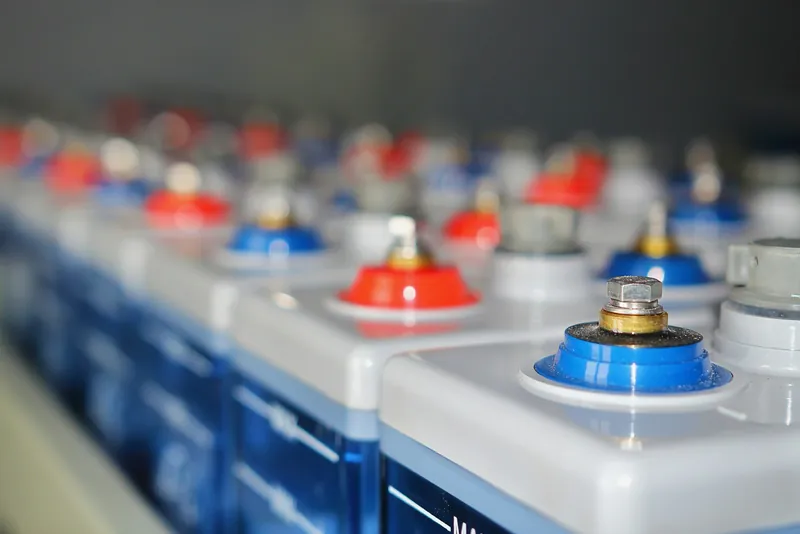
You can often add a battery to an existing business solar system. Whether it makes sense, and what it costs, depends on a handful of things you can check before you speak to any installer.
Most of those things are about your existing system, not the battery. That is why it pays to look at what you have first.
Start with what your solar already does
A battery stores solar power your site doesn't use in the middle of the day. You then use it later, often in the evening, instead of exporting it or buying from the grid.
So the first question is how much solar you currently export. If most of your power is used on site as it is generated, a battery has little to store. If you export a lot and then buy power after the sun goes down, a battery has more to work with.
Your bills and your interval data show this. If your solar has never been checked, confirm it is performing as it should before adding anything. Our solar auditing and servicing page explains how that works.
A checklist before you ask for quotes
- Your inverter. For the federal battery discount, the inverter the battery connects to must be capable of joining a virtual power plant and be on the Clean Energy Council approved list. Ask your installer to check yours against that list. If it isn't on it, ask what replacing it would add to the quote.
- Your existing system's condition. The existing solar must meet state electrical safety rules. Ask for a safety check up front, so any fixes are in the quote and not a surprise later.
- Your system size. The federal discount applies to a battery added to an existing solar system of 1 MW or less. Check your system's size against that on your installation paperwork.
- Your battery size. The federal and NSW discounts cover different battery size ranges, and capacity is counted differently in each. Don't assume one number fits both.
- Your installer's accreditation. Under the NSW discount, installers of batteries from 20 to 200 kWh need Solar Accreditation Australia (SAA) accreditation. Larger batteries need a licensed installer. The federal discount needs an installer with SAA accreditation and a battery endorsement. Ask to see it.
- Your network approval. Ausgrid lists "installing a battery" as an upgrade to an existing system. Ausgrid's pages are written mainly for households, so ask your installer how the application works for a commercial site, who lodges it and how long it takes. If you are on another network, such as Endeavour, ask the same questions.
- Who owns the site. If you rent, the property owner will usually need to be part of the decision, because eligibility generally sits with the owner.
How the discounts work for a battery on existing solar
There are two discounts, and a business can often use both.
The NSW discount has run since 1 September 2026, with no closing date. It covers batteries from 20 kWh up at NSW businesses. A battery on its own gets a smaller discount than a battery installed with new solar. The NSW Government describes the overall cut to upfront cost as "around 20 to 40 per cent". A minimum payment applies to batteries from 20 to 200 kWh, so ask what it is for your size.
Here is the part that matters if you already have panels. To get the higher rate, you need to add new solar of at least 25 per cent of the battery's capacity, installed within 90 days either side of the battery. A business with existing solar can still qualify if it adds new panels that meet that rule. A battery added to existing panels with no new solar may only get the battery-only rate, so ask your installer to confirm in writing which one applies to you.
The federal Cheaper Home Batteries program works differently. It uses Small-scale Technology Certificates (STCs), claimed on the first 50 kWh of usable capacity only, for batteries of 5 to 100 kWh nominal. The Clean Energy Regulator describes the result as "around a 30% discount". The certificate factor steps down on a set schedule through to 2030, so waiting does not make the federal discount bigger.
The two can generally be combined, with the federal discount applied first. Because the size ranges differ, ask for the combined figure in writing, with each discount shown separately. What you actually get depends on your battery, your installer and your site.
The rules that catch people out
- One battery per meter. Only one battery can claim per National Metering Identifier (NMI) or commercial sub-meter, and a later upgrade at the same premises can't claim again. Think about future needs before you settle on a size.
- It must stay put. The battery must stay on site until the end of its warranty or the end of 2030, whichever is later.
- Product standards. The battery must be Clean Energy Council listed and comply with AS/NZS 5139:2019.
- A certificate provider. Every NSW installer must partner with an Accredited Certificate Provider, listed on the IPART website. Ask which one yours uses.
- Smart inverter rules. Ausgrid says upgraded systems in NSW must now include a smart solar inverter that connects to the internet. Ask your installer whether your setup meets this.
Ausgrid also says exports can vary with flexible limits, virtual power plant participation, a lost internet connection or an emergency backstop. If you export a lot, ask how that could affect your site.
Does it pay back?
It depends on your tariff, your usage pattern and how much solar you export. Anyone who quotes a payback without looking at your bills is guessing.
Before you ask for quotes, gather your last 12 months of electricity bills, your interval data if you can get it, and your solar system's details. A good quote then shows its assumptions, so you can test them against your own bills. Treat any savings figure as an estimate, not a promise.
If you want a broader look at how a battery fits with your tariff and usage, our energy consulting and feasibility studies page explains what we review.
Next step: send us your bills
We help with power and gas, so we look at both when we work out what a battery could do for your site.
Send your latest power and gas bills to bills@omnienergysolutions.com.au, or call us on 0433 679 324. We will give you a free look at what solar or a battery could do for your site, and tell you plainly if it doesn't stack up yet.

Director, Omni Energy Solutions. UNSW photovoltaic engineer, formerly Head of Service at Smart Commercial Solar and Head of Engineering Services at EVSE.