Demand charges, explained
Why one busy half hour can set your bill for a month, or a year, and what to do about it.
Tell us a little about your site. The team will reply within 1 business day.
Get my free savings checkBook a 15-min callor call 0433 679 324A demand charge bills you for the hardest your site pulls power in a half hour, not how much you use overall. One busy half hour can set the charge for a month, or on some Ausgrid tariffs, for a year.
How a demand charge works
- It charges for your peak, not your total - energy charges add up every kWh. A demand charge looks only at your highest half hour.
- One reading sets the charge - there's no averaging. Your highest reading is charged for every day of the billing period.
- Only some hours count - a peak at 10am may cost nothing, while the same peak at 5pm sets the bill. Your network tariff decides the window.
Ausgrid and Endeavour work differently
| Ausgrid small business | Ausgrid larger sites | Endeavour Energy | |
|---|---|---|---|
| Tariffs | EA251, EA256 | EA302, EA305, EA310 | N92, N93, N19 |
| Window | 3pm to 9pm, working weekdays | 3pm to 9pm, working weekdays | 4pm to 8pm, business days |
| Months | Nov to Mar, Jun to Aug | All year | All year, dearer Nov to Mar |
| Based on | Highest half hour this month | Highest half hour in 12 months | Highest half hour this month |
| Billed in | kW | kW (EA302), kVA (EA305, EA310) | kW (N92, N93), kVA (N19) |
On Essential Energy, demand is billed in kVA and resets every calendar month. BLND1AB charges on 5pm to 8pm on weekdays. BLND3AO has separate charges for the peak, shoulder and off-peak windows.
The 12-month rule matters most. On EA305, one bad afternoon in January is still on your bill next December.
What one peak costs
50 kVA x 57.80c x 365 days$10,548 a yearIf that peak is your highest in 12 months, you pay for it all year.
50 kVA x 53.11c x 31 days$823.21 in JanuaryNext month starts fresh.
Network charges only, excluding GST. Your retailer adds its own energy rates, and may package these charges differently. Illustrative examples.
Where to find it on your bill
Retailers label this charge differently. Look for a line with demand, capacity or kVA in the name, usually in the network charges section. Then find your network tariff code, such as EA305, N19 or BLND3AO, and look it up in our NSW network tariff guide.
Four ways to bring it down, in order
- Change what runs together - staggering compressors, ovens, chargers or air conditioning start times costs little or nothing.
- Fix power factor - if you're billed in kVA, power factor correction can lower the billed peak.
- Check your tariff - you may qualify for a better fit. Most changes are limited to one every 12 months.
- Add a battery - peak shaving can work well, but it comes last because it costs the most.
When demand isn't your main problem
Some tariffs, such as EA225, EA050, N91 and BLNBSS1, have no demand charge at all. And if your load is high and flat through the whole window, there's no short peak to cut, so look at energy use and contract rates first.
Find out if it's worth doing on your site
Send us what you have. We'll tell you whether it's worth doing, marginal or not worth it.
- Your latest billPower and gas if you have both. A photo is fine.
- 12 months of half-hourly dataWith your sign-off, we can request it for you.
- Anything that's changingExisting solar, new equipment, EV chargers or extra shifts.
From sites we've worked on
AP Bakery
Moved to a load-matched contract, then added a 96 kWh battery with a 110 kVA Sigenergy inverter. Usable site capacity went from around 128 A to around 290 A with no transformer upgrade, plus full blackout backup.
Confeta
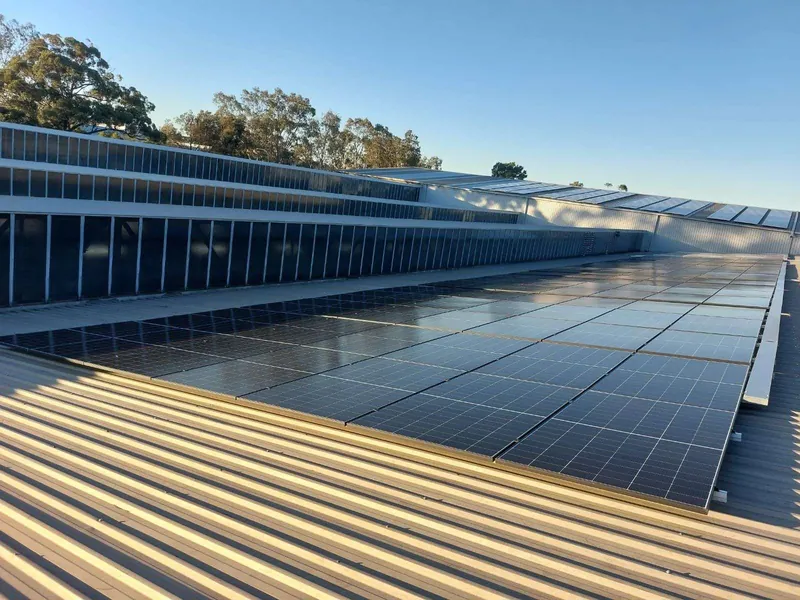
270 kW of rooftop solar sized to a daytime manufacturing load, about 500 MWh made in its first 18 months, plus an energy audit and compressor upgrade that cut energy use by about 20%.
Common questions
What is a demand charge?
A charge based on the highest amount of power your site draws in a half hour during set hours, rather than the total energy you use.
How is a demand charge calculated?
Your highest half-hour reading in the window, in kW or kVA, multiplied by the daily rate and the number of days in the billing period.
Why is my demand charge the same when I used less power?
On Ausgrid's EA302, EA305 and EA310 tariffs the charge uses your highest reading in the past 12 months, so a quiet month doesn't lower it.
Can solar reduce my demand charge?
Sometimes, but the demand window runs into the evening, when solar output is low or gone. Check when your peaks happen first.
Can a battery reduce demand charges?
Yes, if the peak is short enough for the battery to cover and predictable enough to catch every time.
See what you could save
Send a bill or a few details. You'll get a clear answer, with no obligation.