
Fleet and truck charging for depots and warehouses
Electrifying a fleet is mostly a power problem. We work out how much your vehicles actually need each night, what your site can supply, and how to charge everything in time without an oversized grid upgrade.
- Charging needs worked out from your routes and kilometres
- Load management sized to your supply
- Layouts for vans, utes and heavy trucks
Tell us a little about your site. The team will reply within 1 business day.
Get my free savings checkBook a 15-min callor call 0433 679 324We work out what each vehicle needs overnight, check what your site can supply, then design the chargers, layout and load management so the fleet is ready every morning.
A depot full of vans or trucks plugging in at 5pm can ask for more power than the site's connection can give. Usually it doesn't have to. Vehicles parked for 10 to 14 hours rarely need full-speed charging, so smart scheduling, the right mix of charger sizes, and sometimes solar and a battery, can keep the connection the size it is or make the upgrade much smaller.
What makes depot charging hard
- Supply limitsUnmanaged charging at shift change can push a site far past its grid connection.
- Mixed fleetsCars, utes, vans, trucks and plant all have different batteries, charge rates and parking times.
- Layout and accessTrucks need to reverse in and drive out, and cables and dispensers need protecting from strikes.
- StagingFleets go electric over years, not overnight. The backbone needs designing for the end state and building in stages.
- Network approvalsBigger connections need network applications that can take months, so they need to start early.
What fits a depot
Fleet electrification study
Vehicle-by-vehicle energy needs, charging windows, site capacity, layout and staging, in one report.
Learn more →Depot charging and load management
AC chargers for vehicles parked overnight and DC where turnarounds are quick, all sharing the site's capacity.
Learn more →Solar on the warehouse roof
Covers daytime charging and the site's own load.
Learn more →Batteries
Top up a limited grid supply so you can add chargers without a big upgrade.
Learn more →Can your depot charge your fleet?
Your power supply limits how many vehicles you can charge at once. Enter your fleet and supply for a first answer in a few seconds.
-
Your chargers can't deliver a full day's energy in this window. Add chargers, use bigger ones, or lengthen the window.
A first answer only. We confirm it with your interval data and a switchboard check before anything is ordered.
Get my free savings checkComparing electric vans or trucks, range or running costs? Try the fleet calculators on EVdex.
See load management at work
Pick a fleet size and switch load management on and off. Without it, every vehicle charging at once can push the site over its supply limit. With it, the chargers share the spare power and every vehicle is still ready by morning.
An illustration, not a quote. A site check confirms what your supply can take.
From a fleet study we've done
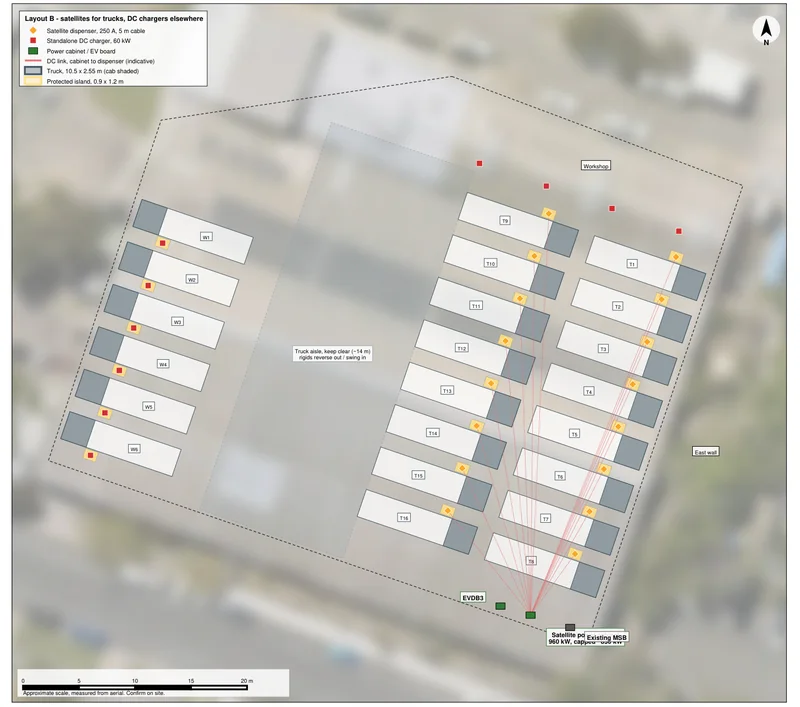
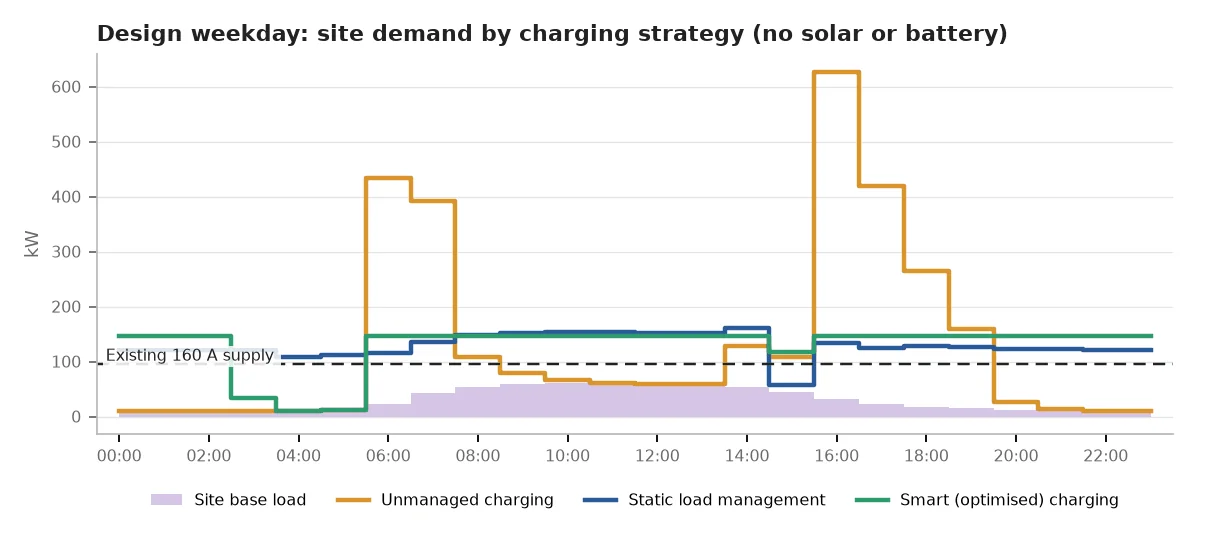
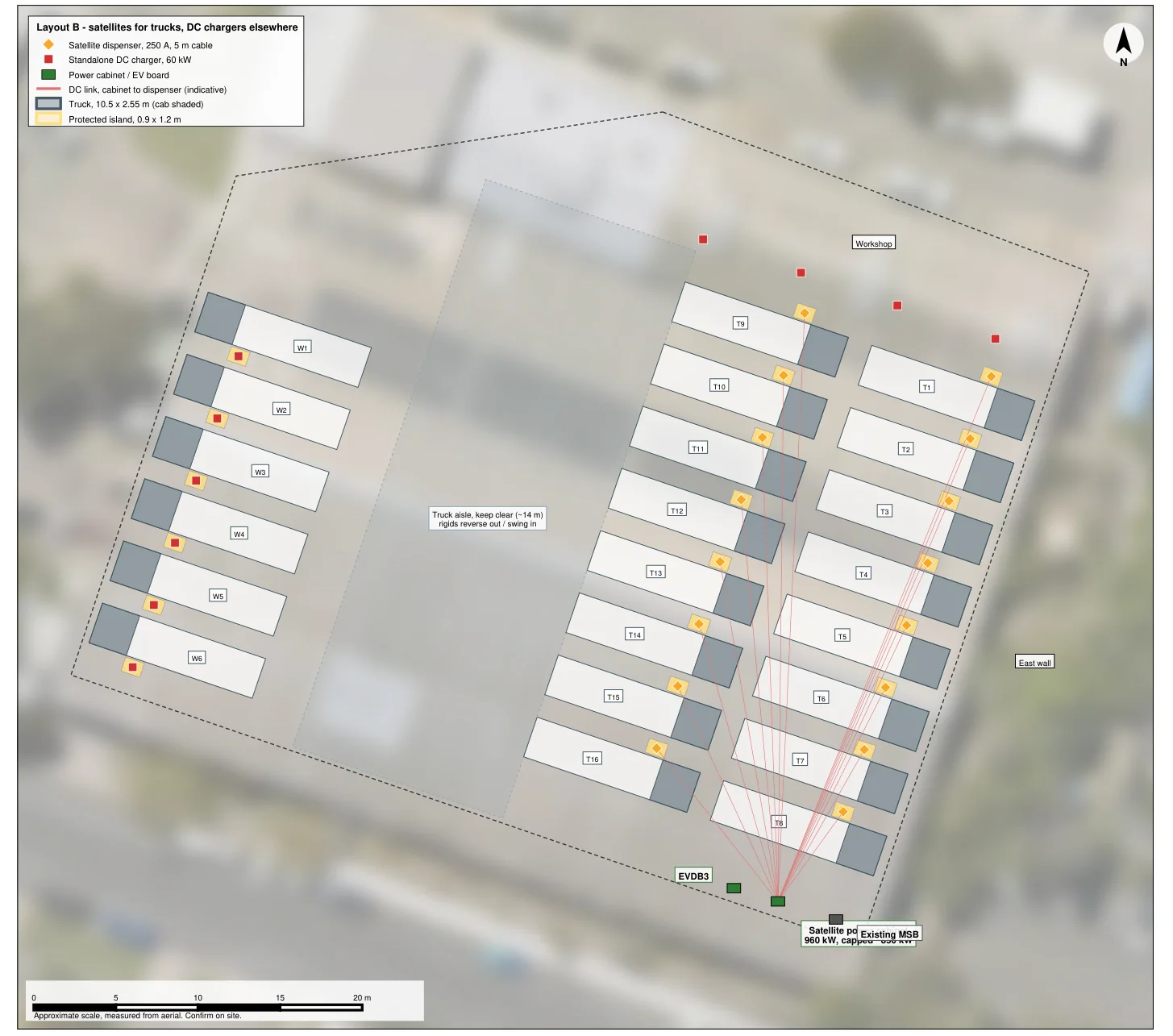
A council depot with 108 vehicles, from cars and utes to tipper trucks, sweepers and ride-on mowers. If everything charged as soon as it was parked, the depot would have peaked at about 627 kW. Scheduling the same charging across the overnight window brought that down to under 150 kW. The study also laid out truck bays with dispensers fed from a shared power cabinet, and modelled solar and battery options to keep the grid upgrade down. Client details are removed.
Simple, and the numbers come first
- Energy analysisWe start with your bills and 30-minute interval data, so the design fits how your site really uses power.
- Feasibility and designRoof, switchboard and grid checks, then a design that balances cost, output and payback.
- InstallationInstalled by our licensed, accredited electrical partner, using quality, well-supported brands.
- Monitoring and supportEvery system is monitored after install, so faults get caught and fixed early.
Common questions
How much charging power does a fleet need?
Less than most people expect. An electric van doing 150 km a day needs roughly 30 to 40 kWh, which a 7 kW charger delivers in about 5 hours overnight. We work it out vehicle by vehicle from your routes or odometer readings.
Do we need DC fast chargers?
Only for vehicles that can't charge overnight or turn around quickly between shifts. Most depot charging is AC overnight, with DC where it's really needed. Heavy trucks are the exception and usually need DC.
Will we need a grid upgrade?
Sometimes, but often a smaller one than you'd think. Load management, charging schedules, solar and batteries all reduce the peak. We check your site's spare capacity first.
How long does it take?
A study takes a few weeks once we have the fleet data. Installation depends on the size of the job and whether the network needs to approve a bigger connection, which can take several months, so it pays to start early.
Can we start small?
Yes. We design the backbone for the whole fleet, then install chargers in stages as vehicles arrive, so nothing has to be ripped out later.
Do you do truck charging at logistics warehouses?
Yes. We plan truck bays, dispenser positions, protection and cable routes around how trucks move through the site, and size the supply for the shift pattern.
Read more
 12 Nov 2026 · 4 min read
EV Charging for Business: What You Need to Know Before Installing
Planning EV charging for your business? Electrical capacity, load management, AC vs DC, solar integration and future-proofing your site.
Read →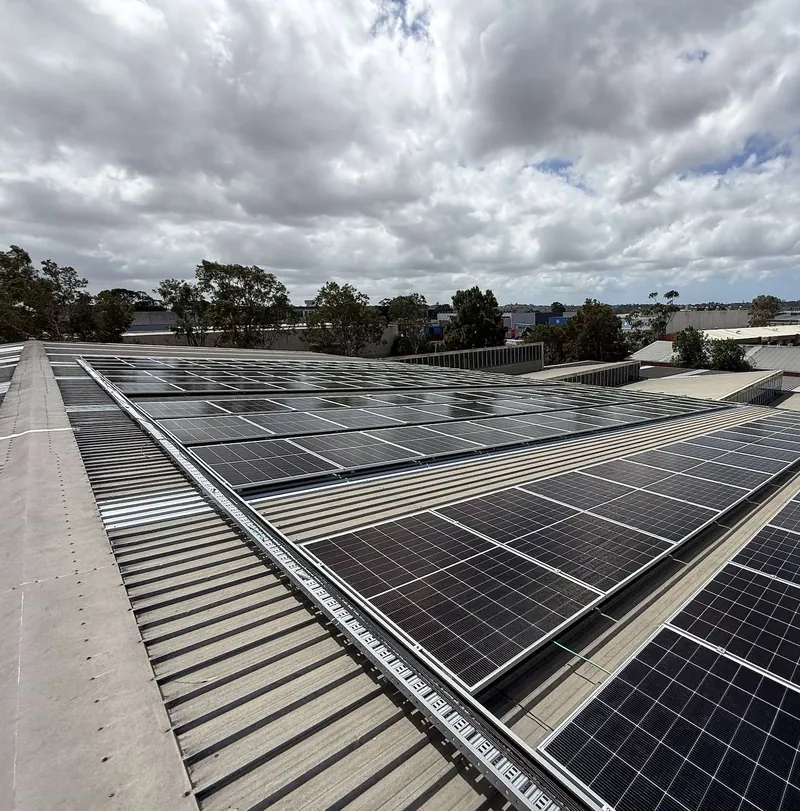 14 Nov 2026 · 4 min read
Energy Feasibility Study: What It Is and When Your Business Needs One
Not sure where to start with solar, batteries or EV charging? What an energy feasibility study covers, when you need one, and what to give the engineer.
Read →See what you could save
Send a bill or a few details. You'll get a clear answer, with no obligation.