BESS5: NSW Commercial and Industrial Battery Discount
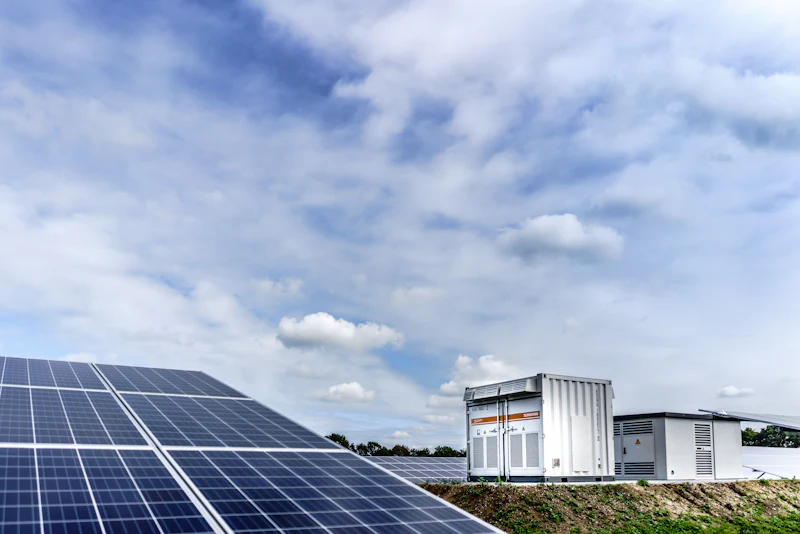
BESS5 is the new NSW battery discount for commercial and industrial sites. It started on 1 September 2026 under the Peak Demand Reduction Scheme (PDRS) and covers batteries from 200 kWh up to 30 MWh.
That's the range for factories, cold storage, food processors, shopping centres, large offices and industrial estates. Until now, batteries at this size have mostly been funded on their own merits, with no state support.
Eligible incentives may apply. The amount depends on your system and your site, so confirm it in a written proposal.
What BESS5 is
The PDRS rewards equipment that reduces demand on the NSW grid at peak times. A large battery can cut a site's draw from the grid by hundreds of kilowatts in the hours when the network is under the most strain.
An Accredited Certificate Provider (ACP) creates Peak Reduction Certificates from the battery's peak demand reduction and sells them to energy retailers, which are required to buy them. The value is passed back to the project.
At this scale, the NSW Government notes that larger batteries may need different financial arrangements from a simple upfront discount. That might mean the value is paid in stages or built into a finance or energy agreement. Ask how and when the certificate value reaches you.
How big is the discount?
The NSW Government's indicative range for business batteries is about 30 to 40 per cent off the installation cost with new or additional solar, and about 20 to 30 per cent for a battery on its own.
For large projects, treat that as a starting point only. The value depends on the battery's usable capacity and inverter output, where the site sits on the network, the certificate price at the time and the ACP's terms. Get it modelled for your project.
Planning a large battery? Send us 12 months of power and gas bills and interval data, and we'll model the peaks, the battery size and the PDRS value for your site, at no cost. Email bills@omnienergysolutions.com.au.
Who qualifies
A site can use BESS5 if:
- It's a business site - not a residential building and not a data centre.
- The size fits - between 200 kWh and 30 MWh.
- Fire safety is covered - the battery is tested and passes the required fire safety standards.
- The installer is licensed - check the licence on the Service NSW website.
- It's a first - the site hasn't already used this discount, including under BESS4.
- It's grid connected - off-grid sites can't use it.
- Planning approval is in place - generally a development application (DA).
Planning approval: expect a DA
A battery over 200 kWh generally needs a development application (DA) to council. Some councils will exempt certain systems from a DA, but don't count on it. Check with council early, because a DA can add months to a project and needs fire safety, noise and siting details ready to go.
No minimum payment
Unlike BESS3 and BESS4, BESS5 has no IPART minimum customer payment. That opens the door to funded and shared-savings models, where a partner pays for some or all of the battery and the site shares the benefit.
That flexibility cuts both ways. Read any funded offer closely: who owns the battery, who gets the certificate value, who controls how it runs, and what happens at the end of the term.
The solar bonus
The higher discount applies when new solar goes in within 90 days before or after the battery, or extra solar is added to an existing system in that window. The new solar must be at least 25 per cent of the new battery's capacity. For example, a 400 kWh battery needs at least 100 kW of new solar.
As a rule of thumb, new solar lifts the battery discount by about 50 per cent. For example, if the discount on a battery with new solar worked out at $30,000, the same battery without solar would get about $20,000. These numbers are only there to show the ratio. Your quote sets the real figure.
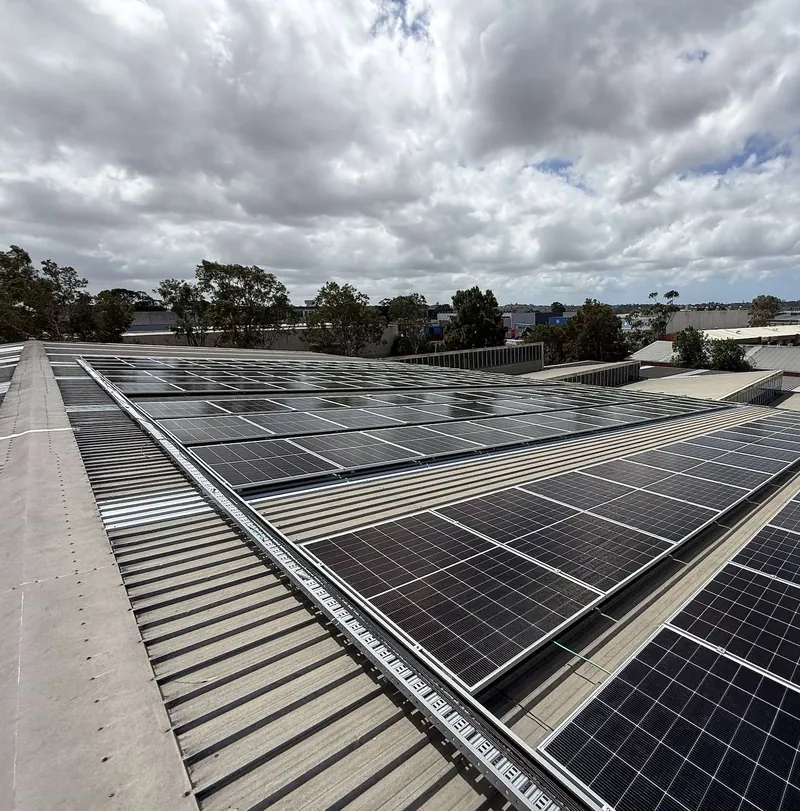
Many large sites have the roof space for this. Mid-scale solar can also attract federal small-scale technology certificates, which makes a solar and battery package worth modelling together.
Where a large battery earns its keep
- Demand charges - large sites often pay a big share of their network bill in demand charges set by short peaks. A battery can shave those peaks.
- Supply limits - if a site has outgrown its connection and the network has no spare capacity, a battery can cover the peak while you wait, or instead of an upgrade.
- Solar self-use - store midday solar and use it into the evening.
- Wholesale exposure - sites on spot-linked contracts can avoid the most expensive intervals.
- Backup - keep critical loads, like refrigeration, running through an outage if backup is designed in.
A battery that does two or three of these jobs is much easier to justify than one that does only one. Any savings are estimates until they're modelled on your own interval data and tariff.
How to plan a BESS5 project
- Start with your bills - power and gas, plus at least 12 months of interval data.
- Check your contract - your retail rates and network tariff change the battery's value.
- Model the load - find the peaks, when they happen and what's driving them.
- Size the system - battery and solar together, against your peaks and roof space.
- Start approvals early - lodge the DA (or confirm the council exemption) and the network connection application, as both can take time.
- Compare proposals - capital cost, certificate value and timing, warranty and performance terms.
- Install and commission - licensed installer, fire safety compliance and audit-ready records.
How Omni can help
We work with large NSW sites on their power and gas costs first, then model whether a battery, solar or both make sense from your own data. We design the system, manage the network application, prepare a proposal that shows the PDRS value clearly, and deliver it with licensed installers.
For the full picture, read our complete guide to BESS3, BESS4 and BESS5.
Get a free battery check
Send us your power and gas bills and interval data. We'll model the battery and solar against your peaks, map out the approvals, and show the PDRS value clearly in the proposal.
- Email your bills - bills@omnienergysolutions.com.au
- Call us - 0433 679 324
- Send us a message - through our contact page
No obligation. You'll get a plain answer on whether a battery, solar or both make sense for your site.
Sources: NSW Climate and Energy Action, Batteries for businesses incentive, IPART, Peak Shifting, IPART, Upgrade costs. Checked 11 November 2026.

Director, Omni Energy Solutions. UNSW photovoltaic engineer, formerly Head of Service at Smart Commercial Solar and Head of Engineering Services at EVSE.