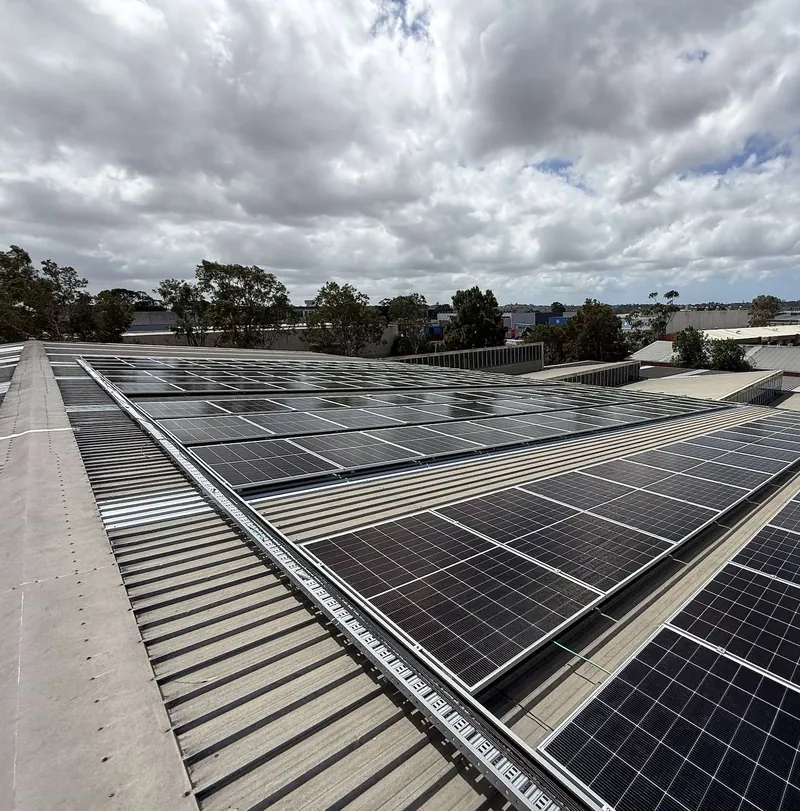
BESS4: NSW Battery Discount for Small and Medium Business
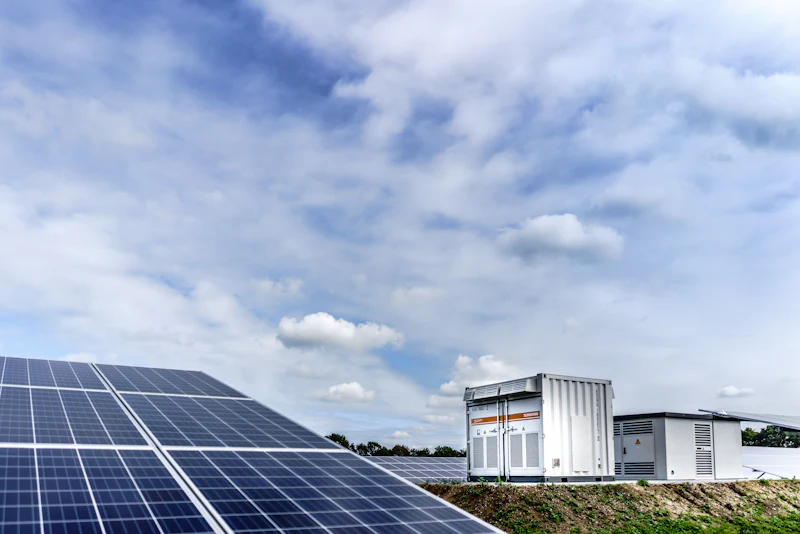
BESS4 is the new NSW battery discount for small and medium businesses. It started on 1 September 2026 under the Peak Demand Reduction Scheme (PDRS) and covers batteries from 20 kWh up to 200 kWh.
That's the size range that suits most cafes, restaurants, workshops, medical practices, small factories and retail sites. It's also the first time NSW has offered real support for batteries at this scale.
Eligible incentives may apply. The amount depends on your battery and your site, so confirm it in a written quote.
What BESS4 is
The PDRS pays for equipment that cuts demand on the grid at peak times. A battery does exactly that: it charges when power is cheap or the sun is out, then supplies your site when the grid is under the most pressure.
When your battery goes in, an Accredited Certificate Provider (ACP) creates Peak Reduction Certificates and sells them to energy retailers, which are required to buy them. The value comes back to you as an upfront discount on the installation.
How big is the discount?
The NSW Government says the discount for businesses can be about:
- 30 to 40 per cent - when the battery goes in with new or additional solar.
- 20 to 30 per cent - for a battery on its own.
Those figures are indicative. Your actual discount depends on the battery model, your installer's pricing, your site and the ACP's costs. Get more than one quote and compare the discount line on each.
Want a number for your business? Send us your latest power and gas bills and we'll work out roughly what the discount could be, and whether a battery pays its way, at no cost. Email bills@omnienergysolutions.com.au.
Who qualifies
Your site can use BESS4 if:
- It's a business site - not a residential building and not a data centre.
- The battery is approved - on the Clean Energy Council's approved batteries list.
- The size fits - usable capacity above 20 kWh and up to 200 kWh, counted as 90 per cent of the nominal capacity on that list.
- It's a first - no earlier PDRS battery installation at the site.
- It's behind the meter - with network approval and planning approval in place.
- The installer is SAA accredited - on the Solar Accreditation Australia list.
You don't need solar to qualify. Solar just makes the discount bigger.
The solar bonus
To get the higher discount, install new solar within 90 days before or after the battery. If you already have solar, add extra capacity in that window. The new solar must be at least 25 per cent of the new battery's capacity. For example, a 120 kWh battery needs at least 30 kW of new solar.
As a rule of thumb, new solar lifts the battery discount by about 50 per cent. For example, if the discount on a battery with new solar worked out at $30,000, the same battery without solar would get about $20,000. These numbers are only there to show the ratio. Your quote sets the real figure.
That solar can also attract federal small-scale technology certificates, so both halves of the job can carry a discount.
What you pay
IPART sets a minimum customer payment for BESS4 of $5,000 (excl GST) per site. It's there to stop "free battery" offers and to make sure the business has a real stake in the system. If you finance the job, the lender can make that payment and it becomes part of the loan.
Planning approval: a CDC
A BESS4 battery needs planning approval. For systems up to 200 kWh, that's usually a Complying Development Certificate (CDC), so you'll need to engage a private certifier. It adds some cost and a few weeks, so put it in the budget and the timeline from the start.
Is BESS4 worth it for your business?
A discount only matters if the battery pays its way. For a small or medium business, a battery usually earns its keep in three ways:
- More of your own solar - store what you'd otherwise export for a few cents and use it in the evening.
- Lower demand charges - on many business tariffs, the single highest spike in the month sets the demand charge. A battery can cover that spike.
- Fewer supply headaches - if your site keeps tripping at peak times and the network can't offer a bigger supply, a battery can cover the peak, and it's much faster than a network upgrade.
It's less likely to stack up if your bills are small, your use is mostly overnight with no room for solar, or you're about to move. Any savings figure is an estimate until it's modelled on your own interval data.
How to get BESS4 on your quote
- Send your bills first - your latest power and gas bills, plus 12 months of interval data if you have it.
- Fix your rates - a cheaper retail plan is the quickest win and changes the battery maths.
- Size from your data - match the battery to your actual peaks and solar.
- Check the quote - battery model, total cost and the PDRS discount as its own line.
- Read the IPART fact sheet - the installer must give it to you with the quote.
- Get the CDC - engage a certifier for planning approval.
- Sign the nomination form - keep a copy.
- Install - approvals in place, SAA-accredited installer, then commissioning.
An auditor may contact you afterwards to confirm the details. That's normal and it protects the scheme.
Red flags
- A quote under the minimum payment - it isn't compliant.
- No discount line - you can't check what you can't see.
- Door knocking - salespeople can't knock uninvited under the PDRS.
- Sizing without your data - that's a guess, not a design.
How Omni can help
We look at your power and gas bills first, then model whether a battery, solar or both make sense, and size it from your own data. The quote shows the discount clearly, and we work with accredited installers to put it in.
For the full picture across apartments, small business and large commercial sites, read our complete guide to BESS3, BESS4 and BESS5.
Get a free battery check
Send us your power and gas bills. We'll check your rates, model a battery and solar from your own data, and show the BESS4 discount as its own line on the quote.
- Email your bills - bills@omnienergysolutions.com.au
- Call us - 0433 679 324
- Send us a message - through our contact page
No obligation. You'll get a plain answer on whether a battery, solar or both make sense for your business.
Sources: NSW Climate and Energy Action, Batteries for businesses incentive, IPART, Peak Shifting, IPART, Upgrade costs. Checked 11 November 2026.

Director, Omni Energy Solutions. UNSW photovoltaic engineer, formerly Head of Service at Smart Commercial Solar and Head of Engineering Services at EVSE.