Battery Discount Steps Down on 1 January 2027: What It Means for Your Business
The federal battery discount gets smaller on 1 January 2027 and keeps stepping down every six months to 2030. Small businesses can claim it too, for batteries of 5 to 100 kWh. Don't rush a battery to beat the date: check your bills first, then get the installer to confirm in writing what discount your quote assumes and which date locks it in.
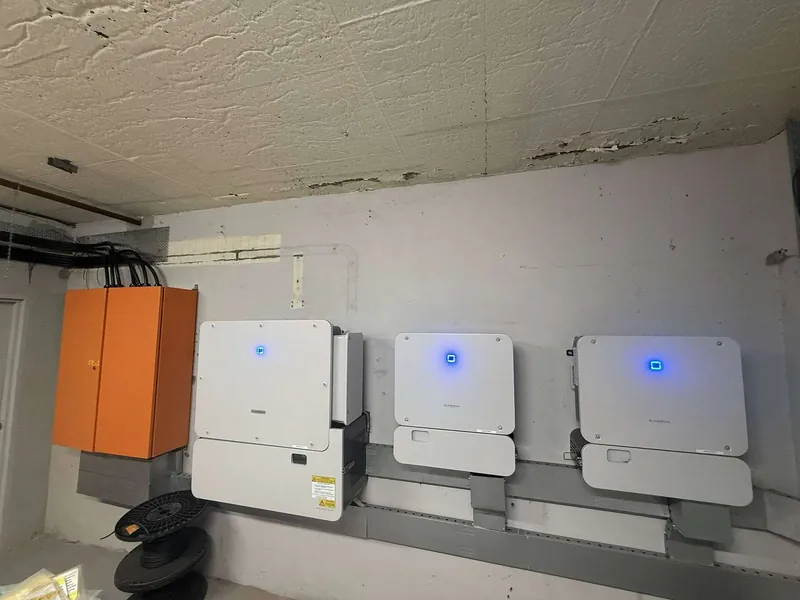
The federal battery discount gets smaller on 1 January 2027. It then steps down again every six months until 2030.
More than 600,000 discounted home batteries are now installed across Australia, according to RenewEconomy's report on the home battery market. Suppliers are competing hard on price, and the discount is being wound back on a set schedule.
What changed
The discount on a battery is built from small-scale technology certificates, or STCs. When the amount of discount per unit of battery capacity falls, the discount on the same battery falls with it.
The 1 January 2027 step is the first of several, each six months apart. It is scheduled policy, not a surprise announcement. It is a slow slide that runs for years.
Does it apply to a business battery?
Yes, for many small sites. Despite the name, the Cheaper Home Batteries Program is open to small businesses and community organisations as well as households. It covers batteries with between 5 and 100 kWh of usable capacity, installed alongside solar.
Larger discounts apply to the first part of a battery's capacity, and less to the rest. So the bigger the battery, the smaller the discount per kWh on the top end of it.
Eligibility still comes down to your own system, your site and the installer's accreditation. Get the answer in writing before you rely on any discount figure. Put these questions to your installer or designer:
- Does this battery qualify for the STC discount at all? Ask them to say yes or no for your system and site.
- Which date locks in the discount? Ask whether it is the date you sign, the date of installation or the date of connection.
- What discount does the quote assume? It should be shown as its own line, with the date it applies from.
- What happens to the price if the project slips past 1 January? Ask for the answer in the quote.
If an installer cannot answer these clearly, that tells you something about the quote.
What it means for your bill and plans
A smaller discount makes a battery somewhat dearer to buy over time, all else being equal. It does not change what a battery does on your site.
The value of a battery still comes from your own bills. It depends on things like:
- When you use power - a site that runs hard in the late afternoon and evening has more to gain from stored solar than one that closes at 3pm.
- Your demand charges - if your bill has a peak demand component, a battery may help trim it. Check that line on your bill before you assume anything.
- How much solar you already have - spare midday solar is the cheapest thing to store. Without it, a battery has less to work with.
- Your network tariff - the way your network charges you changes how much a battery can help.
Savings and paybacks are estimates, not promises. Two sites with the same battery can see quite different results.
Should you rush?
A deadline is a poor reason to buy a battery. A rushed decision on the wrong size or the wrong site can cost more than a smaller discount.
It is also a poor reason to wait. If the numbers already work on your bills, waiting means carrying your current power costs for longer.
The sensible order is to look at your bills first, then size the system, then work out timing. The step-down dates are one input among several.
What to do now
Here is a short list for a NSW business owner or property manager:
- Pull your last 12 months of bills - power and gas. You want usage, peak demand and the network tariff.
- Check your solar - if you already have a system, confirm it is working properly. Our guide on how to know if your solar system is working is a good start.
- Get the four eligibility questions above answered in writing - from every installer you are talking to.
- Get a feasibility look before you sign - our energy consulting and feasibility studies work tests whether solar or a battery makes sense for your bills.
- Compare quotes on the same basis - make sure each one states the discount it assumes, the date it applies from and the size of the battery.
Omni designs, quotes and project-manages. Licensed partners do the installation. If solar is part of the picture, see our commercial solar design and installation page.
We have worked on projects such as 270 kW of solar for a Sydney packaging manufacturer and 150 kW for a poultry food producer. Every site is different, which is why we start with the bills.
Send us your bills
We help with power and gas. Send your latest power and gas bills to bills@omnienergysolutions.com.au or call us on 0433 679 324 for a free look at what solar or a battery could do for your site.
We will tell you plainly whether a battery suits your bills and when the timing makes sense.

Director, Omni Energy Solutions. UNSW photovoltaic engineer, formerly Head of Service at Smart Commercial Solar and Head of Engineering Services at EVSE.